

For modern businesses, data centre availability is no longer simply an IT concern. When critical infrastructure goes offline, the effects can quickly spread across an organisation, distributing applications, limiting access to data and affecting the services employees and customers depend on.
Yet many organisations continue to rely on traditional data centre facilities that were designed for very different IT requirements. As infrastructure ages and demands increase, weakness in power and cooling systems can become significant data centre downtime risks, putting both operational performance and business continuity under pressure.
Why Are Traditional Data Centres More Valuable?
Traditional data centres are often built around fixed infrastructure designed to support predictable workloads. However, today’s environments are far more demanding. Higher rack densities, expanding digital services, cloud connectivity and increasingly intensive compute workloads can place greater pressure on existing systems.
Facilities that were not designed with this level of demand in mind can struggle to adapt efficiently. Ageing equipment, limited redundancy and capacity constraints may also make it more difficult to maintain the level of infrastructure reliability modern organisations require.
The challenge is not necessarily the traditional model itself, but whether the facility can continue to support changing business and technology requirements.
Power Failures Can Bring Operations to a Halt
Power infrastructure is one of the foundations of data centre availability. Servers, storage, networking equipment and cooling systems all depend on a stable and continuous electricity supply.
A power interruption can therefore have an immediate operational impact. While uninterruptible power supplies (UPS) and backup generators can provide resilience, ageing equipment, insufficient redundancy or poorly maintained systems can leave facilities vulnerable.
These power and cooling failures are particularly concerning when businesses depend on critical applications running around the clock. Even a relatively short outage can interrupt internal operations, prevent access to important systems and affect customer-facing services.
Building the resilience into the power infrastructure is therefore essential for reducing downtime causes.
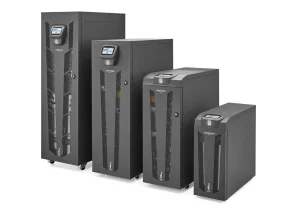
Riello UPS
Cooling Weaknesses Create Another Point of Failure
Power is only part of the equation. Data centre equipment generates significant amount of heat, making effective cooling essential for maintaining safe operating conditions.
If cooling equipment fails or does not have enough capacity to support growing IT loads, temperatures can rise quickly. This may lead to equipment reducing performance, shutting down or, in more serious cases, experiencing component failure.
Older facilities may also rely on cooling approaches that are less suited to modern high-density environments. As computing requirements increase, particularly with the growth of AI and high-performance computing, cooling infrastructure must be capable of handling more concentrated heat loads.
Without sufficient capacity and redundancy, cooling can become a serious weakness in overall infrastructure reliability.
The Business Impact of Data Centre Downtime
The consequences of downtime can reach far beyond the data centre itself. Depending on the systems affected, an outage may disrupt communication, transactions, customer services, production environments and access to business-critical information.
Repeated or prolonged downtime can also affect productivity and customer confidence. For organisations operating critical infrastructure or always-on digital services, maintaining availability is therefore an important part of wider business continuity planning.
Understanding potential points of failure allows organisations to take a more proactive approach rather than waiting for ageing infrastructure to become a problem.
Building Greater Resilience for the Future
Reducing data centre downtime risks starts with understanding whether existing infrastructure is still suitable for current and future requirements. Assessing power capacity, cooling performance redundancy, equipment condition and planned IT growth can help reveal vulnerabilities before they result in disruption.
For some organisations, this may mean upgrading individual systems. For others, modernising the wider data centre environment or introducing modular, scalable infrastructure may provide greater flexibility and resilience.
Ultimately, business continuity depends on infrastructure that can adapt alongside changing technology demands. By addressing power and cooling weaknesses before they lead to failure, organisations can create a more resilient foundation for the systems their operations depend on.
Is your data centre infrastructure ready for growing IT demands?
Oper8 can help you assess, design and deliver resilient data centre infrastructure built around your operational requirements. Speak to our team to discuss your next project.