

As organisations generate more data, adopt AI technologies, and expand digital services, the demand for agile, scalable infrastructure continues to grow. Traditional data centre construction can be time-consuming, complex and difficult to adapt as requirements evolve. Prefabricated data centres offer an alternative approach, proving greater flexibility without compromising performance, resilience or security.
What Is a Prefabricated Data Centre?
A prefabricated data centre is built using factory-manufactured components that are assembled and tested before deployment. These solutions can take many forms, including containerised data centres, panelised data centres and modular infrastructure systems.
Unlike traditional facilities, prefabricated solutions allow construction and testing to take place in parallel with site preparation. This can significantly reduce deployment times while providing greater control over quality and consistency.
Most importantly, prefabricated data centres offer the flexibility to adapt infrastructure to changing business and operational needs.
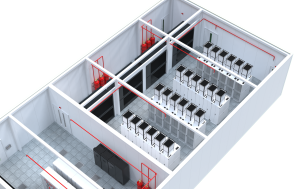
Panelised data centre
Designed Around Specific Requirements
No two organisations have identical infrastructure requirements. Capacity demands, site conditions, security considerations and operational objectives can vary significantly between projects.
Prefabricated data centres can be designed around these unique requirements from the outset. Layouts, cooling systems, power configurations, security controls and rack densities’ can all be tailored to suit a specific application.
This approach enables organisations to avoid the compromises often associated with standardised infrastructure and create environments that support both current and future needs.
Flexible Deployment Options
One of the major advantages of prefabricated infrastructure is the ability to deploy it in a wide range of environments.
Solutions can be installed:
- Within existing buildings
- As standalone external facilities
- At remote locations
- In industrial environments
- At edge computing sites
- As part of a phased expansion strategy
This flexibility allows organisations to deploy critical infrastructure where it is needed most, rather than being constrained by the limitations of traditional construction methods.
Easier Scalability
Infrastructure requirements rarely remain static. New technologies, increased workloads and business growth can quickly create demand for additional capacity.
Prefabricated data centres support a more scalable approach to growth. Additional modules, rooms or infrastructure components can often be added as demand increases, allowing organisations to expand in stages rather than undertaking large-scale construction projects from the beginning.
This phased approach can help reduce upfront investment while ensuring capacity remains aligned with operational requirements.
Supporting Modern Workloads
The growth of artificial intelligence machine learning and high-performance computing has placed new demands on data centre infrastructure.
Modern prefabricated solutions can be engineered to support high-density IT environments, advanced cooling technologies and increased power requirements. Whether deploying GPU-rich AI environments, edge computing infrastructure or business-critical applications, organisations can design facilities around the performance demands of their workloads.
The ability to adapt infrastructure as their technology evolves helps ensure facilities remain relevant for years to come.
Greater Project Adaptability
Projects can change throughout the design and delivery process. Budget adjustments, changing priorities, site constraints and evolving technical requirements often create challenges for traditional builds.
Because prefabricated solutions are inherently modular, they can provide a greater degree of adaptability during planning and deployment. Designs can be refined, expanded or phased to better align with project objectives while maintaining consistency across the overall infrastructure environment.
This flexibility can help reduce risk and support more predictable product outcomes.
Building for the Future
As organisations continue to modernise their digital infrastructure, flexibility has become a critical consideration. Solutions must be able to adapt to changing demands, support emerging technologies and scale alongside business growth.
Effective long-term infrastructure planning requires organisations to balance current requirements with future growth. Prefabricated modular data centres provide a scalable infrastructure foundation that can expand as needs evolve, supporting both today’s workloads and tomorrow’s opportunities.
Whether you’re planning a new facility, expanding existing capacity or exploring modular infrastructure options, Oper8 can help. Contact our team to discuss your requirements and discover how a prefabricated data centre solution can support your long-term objectives.