
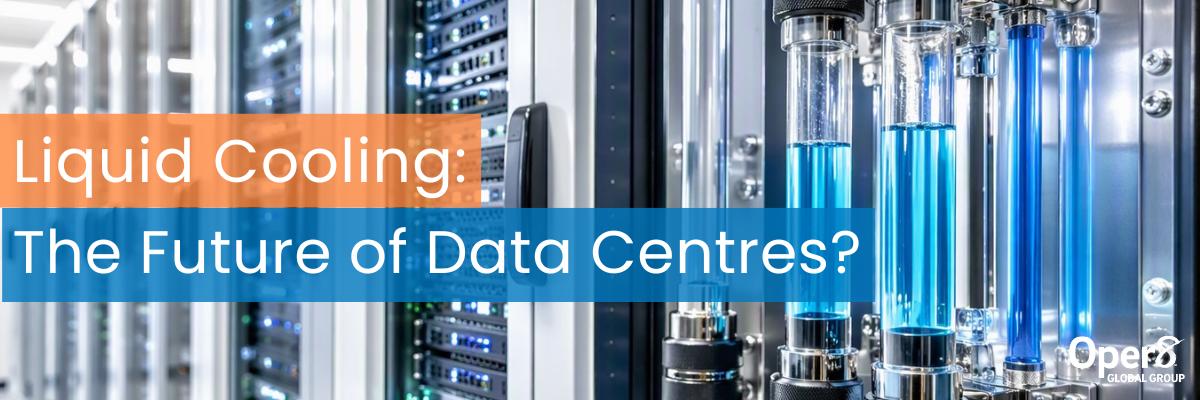
Liquid cooling is increasingly becoming one of the most important innovations in modern data centres, helping operators manage rising heat loads as demands for digital infrastructure continues to grow.
The rapid growth of AI, high-performance computing (HPC) and cloud services is driving significantly higher heat output within modern data centres. Increasing rack densities and GPU-heavy workloads are placing greater demands on traditional cooling methods. As a result, liquid cooling is emerging as the fastest-growing solution, offering superior efficiency, scalability and cost-effectiveness for supporting high-density environments. However, the biggest question is can traditional cooling keep up or is liquid cooling the future?
In this article, we examine the growing role of liquid cooling in modern data centres, outlining the key benefits and the advanced cooling systems our Oper8 technicians are actively deploying across specialist, high-density environments.
What is liquid cooling?
Liquid cooling is becoming a key topic across the data centre industry, but what exactly is it and why is it gaining so much attention?
Liquid cooling in data centres is an advanced cooling method that uses liquid (typically water or coolant) to absorb and remove heat directly from high-performance IT equipment such as CPUs and GPUs. Unlike traditional cooling methods (which rely on circulating chilled air around servers) liquid cooling transfers heat more efficiently due to the higher thermal conductivity of liquids.
With coolant flowing through cold plates attached to components where servers are submerged in non-conductive fluid, direct-to-chip cooling is a popular choice. This method removes the heat directly at the source, enabling higher rack densities, improving energy efficiency and supporting the growing demands of AI and HPC environments.
Why is liquid cooling gaining so much momentum?
As data centres adapt to the growing demands of AI, machine learning and HPC, they are generating significantly more heat than ever before. Higher rack densities are pushing traditional air cooling methods to their limits, creating an urgent need for more efficient and scalable thermal management solutions.
Liquid cooling addresses this challenge by removing heat directly from critical components, reducing energy consumption while also enhancing overall system performance simultaneously.
At the same time, increasing pressure to meet sustainability targets and minimise operational costs is driving organisations to adopt more energy-efficient technologies. As a result, liquid cooling is emerging as a key enabler of next-generation data centre infrastructure, supporting long-term scalability while aligning with environmental and efficiency goals.
Liquid cooling isn’t replacing air entirely just yet, but it is reshaping how data centres are being designed, planned and upgraded.
How do you choose the right cooling strategy?
Choosing the right cooling system may seem like a challenge, especially in high-performance environments. At Oper8, our expert technicians guide you through the process, delivering tailored cooling systems best suited to maximise the efficiency and productivity of your data centre solution.
Whether you require a compact micro data centre or a large-scale containerised solution, our Oper8 technicians take the time to understand your exact requirements, designing customisable, scalable and energy-efficient infrastructure solutions tailored to your business.
From design through to installation, our specialists handpick and integrate the most effective cooling solution to ensure consistent performance and maximise long-term infrastructure value.