
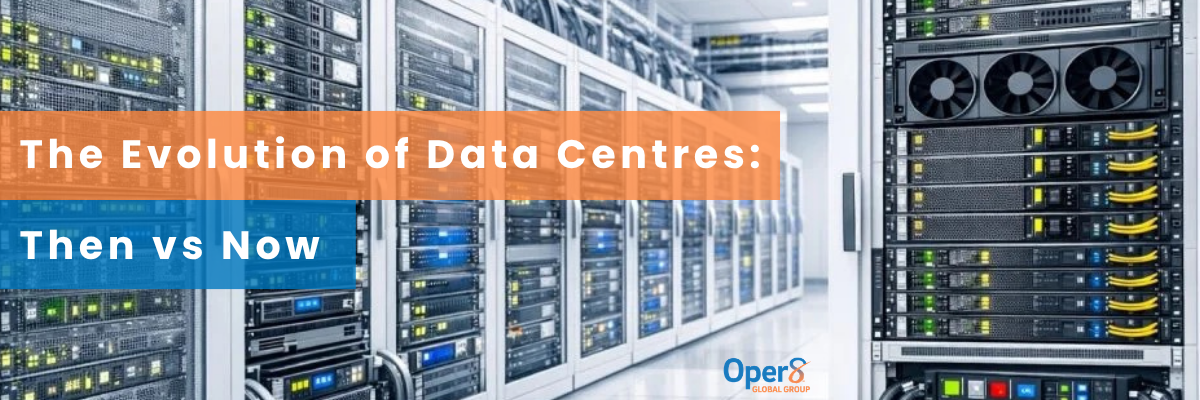
Data centres have transformed dramatically over the years. What began as simple rooms filled with large computers has evolved into highly sophisticated facilities that power almost every aspect of modern life.
From cloud computing and online banking to streaming services and artificial intelligence (AI), today’s digital world depends on data centres more than ever before. Understanding how they have evolved helps highlight just how critical they have become to businesses and society.
Data Centres in the Early Days
In the early days of computing, data centres were primarily used by large organisations, government agencies, and research institutions. These facilities housed massive mainframe computers that required significant power, cooling and physical space. The equipment was expensive, and access to computing resources was limited to a relatively small number of users.
Data centres at this time were focused on functionality rather than efficiency. Systems often operated in isolation, making data sharing difficult and limiting scalability. Energy consumption was high, monitoring capabilities were limited, and business relied heavily on manual processes for maintenance and management. While effective for the time, these environments lacked the flexibility and efficiency expected today.
Despite their limitations, early data centres laid the foundations for the infrastructure we rely on today.
The Rise of Enterprise Data Centres
As technology became more accessible throughout the 1980s and 1990s, businesses began investing in their own data centre environments. The growing use of personal computers and networking technologies increased demand for reliable IT infrastructure.
Servers became smaller, more powerful, and easier to deploy. Networking capabilities improved, allowing systems to communicate more effectively and support growing business operations.
However, managing these facilities was often costly. Organisations typically purchased enough hardware to support future growth, resulting in unused capacity and higher operational expenses.
The Cloud Revolution
The introduction of cloud computing marked one of the most significant turning points in the evolution of data centres.
Rather than owning and maintaining physical infrastructure, businesses could access computing resources on demand through cloud providers. This offered greater flexibility, reduced upfront costs, and made it easier to scale services as requirements changed.
At the same time, hyperscale data centres emerged. These massive facilities were designed to support cloud platforms and global digital services, delivering unprecedented levels of performance, availability, and efficiency.
Cloud technology fundamentally changed how organisations viewed IT infrastructure, shifting the focus from ownership to accessibility and scalability.
Modern Data Centres
Today’s data centres are designed to deliver high levels of reliability, security, and efficiency.
Advanced monitoring systems provide real-time visibility into infrastructure performance, while automated management tools help reduce downtime and improve operational efficiency. Redundant power systems, backup generators, and robust physical security measures ensure critical services remain available even during unexpected disruptions.
Virtualisation has also transformed how infrastructure is used. Multiple workloads can now run on shared resources, increasing efficiency while reducing costs. Many organisations also combine on-premises infrastructure with public and private cloud services through hybrid and multi-cloud strategies.
As a result, modern data centres are far more agile and resilient than their predecessors.
Sustainability Takes Centre Stage
As demand for digital services continues to increase, sustainability has become a major focus across the industry.
Data centre operators are investing in more energy-efficient technologies to reduce power consumption and environmental impact. Innovations such as liquid cooling, intelligent energy management systems, and renewable energy adoption are helping facilities operate more sustainably while maintaining performance.
For businesses, sustainability is about more than environmental responsibility. Efficient infrastructure can lower operating costs, improve resource utilisation, and support wider ESG objectives. As a result, sustainability is now a key consideration in both data centre design and operation
Image credit: hiref.com
Looking Ahead
The next phase of data centre evolution is already underway. Technologies such as AI, machine learning, and edge computing are creating new infrastructure demands and driving further innovation.
AI workloads require increased processing power and advanced cooling capabilities, while edge data centres are bringing computing resources closer to users to reduce latency and support real-time applications.
As these trends continue, data centres will need to balance performance, scalability, and sustainability. While the technology has evolved dramatically from the days of mainframe computers, their role remains the same: providing the reliable foundation that powers our increasingly digital world.
From the earliest computer rooms to today’s intelligent, highly efficient facilities, the evolution of data centres reflects the ongoing advancement of technology and their growing importance to modern business and society.
How Oper8 Can Help Guide This Journey
As data centres continue to evolve, choosing the right infrastructure partner is more important than ever. At Oper8, we help businesses navigate changing technology demands with secure and resilient data centre solutions. Whether you’re looking to support growth, support efficiency, or future proof your IT infrastructure, our experienced team can provide the expertise and facilities needed to support your digital journey.
Contact our team today to learn how Oper8 can help your business prepare for the future.